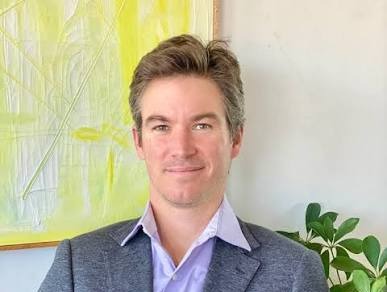

Travis Lee approaches development as a long-term commitment to people and place. As founder of TLee Development, he has built his work around the idea that real estate can do more than create housing or commercial space, it can help strengthen neighborhoods, support local businesses, and create opportunities for those who call those community’s home. Much of his work has focused on the Fields Corner and Codman Square neighborhoods in Dorchester, where he has taken a deeply place-based approach that has been shaped by listening, trust-building, and a belief that development should reflect a community’s own vision.
In this insightful conversation, Travis reflects on the philosophy behind that work and the values that continue to guide it. He explains why investing deeply in one neighborhood matters, how small businesses and public spaces contribute to a healthier community, and why he has made it a priority to create pathways for emerging developers and contractors. Throughout the conversation, Travis offers a thoughtful perspective on accountability, partnership, and what it means to build not just projects, but lasting relationships in the neighborhoods where he works and lives.
Throughout your career you have taken a highly focused, place-based approach to development, particularly in Fields Corner and Dorchester, why has investing deeply in a single community been so important to you and your vision?
On a surface level, it’s important because my philosophy of work is rooted in getting to know the people that I’m working for, with, and around and developing those relationships while also building trust.
At the heart of everything I do in a community, trust is essential. And trust isn’t built overnight. It’s not built through a single project. It’s built over years, through multiple projects, multiple conversations, and multiple trips around the track.
Building relationships with people who are themselves deeply invested in a place allows them to see, over time, that what they say to me matters and what I say to them matters. It also gives me the opportunity to understand a community’s vision for itself, which doesn’t happen in a single meeting, and to join that vision rather than imposing my own.
That approach tends to require longer timelines and more patience, but it also creates stronger relationships and deeper levels of trust. Over time, it has led people to call me and say, “We’d like you to come take a look at this,” or “Here’s what we’re hoping for in our neighborhood. Would you be willing to consider it?” That has been positive not only for the community, but for my business as well.
On a broader level, Boston is known for having a complicated permitting process. One reason for that is that neighbors and abutters have historically had a strong voice in determining whether or not projects move forward. Investing time upfront to show people that you care. That you want to understand their concerns, and that you’re committed to creating something they can be proud of goes a long way toward building support and eventually moving projects forward.
On a more personal level, I live in these neighborhoods. I’ve lived in both Fields Corner and Codman Square, and I’ve spent much of my life between them. I strongly believe that what is good for the community should also be good for my family. When I think about what I want for my family, I want those same things for my neighbors.
Working in the same neighborhood where you live cuts both ways. It means I can’t make promises I don’t keep. I can’t take advantage of people without being held accountable. And I appreciate that accountability. More than that, it’s a privilege to view my family’s well-being through the same lens as the well-being of the community I work and live in.
There’s a strong alignment of interests there. I’m not coming into someone else’s neighborhood and saying, “Trust me, you’ll learn to appreciate this.” My wife, my children, and I will be live with whatever we build every day. It matters to us, too.
That’s not necessarily a persuasive argument for the community, but it is something that keeps me honest, thoughtful, and grounded in many of the decisions that I’m asking people to embrace.
Small businesses are often the backbone of a thriving neighborhood like Fields Corner. Why do commercial spaces and local entrepreneurship remain an essential part of your approach to development?
It's a good question because it all fits together. To us the idea that we are community developers means that we are involved in some way with multiple aspects of a human's life in this very small proximity, in this very small geography.
It means that we would like to add an improved quality of life experience to the people that live in this little window of Boston. And it means that we care about their work life, their career opportunities and that we care about their commuting, how long it takes to get to work.
It means we care about the access they have to products and services. And so, as we build things, it kind of goes back to listening to what the community is saying. If the community is saying, “We don't have access to decent restaurants around here. We don't have access to a bank. We don't have easy access to a grocery store.”
Well I say, “let's put our heads together and figure out if something that we are developing in the community can't include one of those things.”
But we are not miracle workers. We have to live within market constraints like everybody else. But to the degree that we can flex a little bit to try to accommodate a neighborhood's desire for say… the first sit-down restaurant to be opened in a particular part of a zip code. We want to go out on a limb, to try to find the entrepreneur that's excited about that and say to the community, “We're not 100% sure this is going to work. It hasn't been done in a long time. But we hear you, and we think it's an awesome idea too, and I also want my kids to be able to go get a smoothie down the street. So, we're going to try this.”
There are multiple reasons why we like to incorporate small business space.
It provides job opportunities in the community that we're building homes in, and it provides potential opportunities for somebody to live and work in the same place, which potentially minimizes or eliminates the commute for a particular person.
That's really important to building a healthy, vibrant community.
In the end, the reason that we focus on small businesses is to ultimately improve the quality of life of the folks that live in our community.
You've intentionally made partnerships with emerging developers and contractors a very important part of your work. Could you explain a little bit about why creating pathways for ownership and opportunity has been an important priority for you in your career?
I think there are a couple of answers to that question.
One is my own life experience and the recognition that I am where I am today largely because there were people along the way during my journey who went out of their way to create opportunities for me and bring me into the ecosystem.
Real estate development is a strange and difficult business to break into. It’s highly capital-intensive and inherently risky. The lenders and investors who finance projects understandably want to work with people who have done it before. The challenge is that it’s hard to gain experience when one of the requirements for entry is already having experience.
I’m incredibly grateful to the people who made space for me over the years. There’s a long list of people like Jen Faigel and Andy Waxman, an old boss of mine at the Upper Manhattan Empowerment Zone, who gave me opportunities before I had fully earned them on paper and those opportunities made all the difference.
In these roles I was able to learn from experienced professionals, I spent years developing skills, and eventually I built a track record that gave me the credibility that I needed to take on projects, secure financing, and eventually build a career. That experience has made me deeply inclined to invest in people who are emerging, who are on the cusp, and who are trying to find their way into the industry.
There’s also a deeper sense of responsibility that comes with it. I’ve benefited from tremendous support throughout my life. My parents helped pay for college, which meant I graduated without debt. I had access to mentors, professional networks, and people I could turn to for advice. I was surrounded by support.
You don’t have to meet many people to realize that’s not everyone’s experience.
If it was difficult for me to navigate my way into the development world despite all of that support, I can only imagine how much harder it is for someone trying to do it largely on their own. That creates a sense of obligation for me. To whom much is given, much is required.
It also doesn’t take much digging to see the historical and systemic barriers that have prevented many people from accessing the same opportunities. Those barriers have disproportionately affected people of color and others who have been excluded from networks of capital, mentorship, and ownership for generations.
When I think about the advantages I’ve had, I feel a responsibility to help create openings for others. In some ways, it feels like a debt I owe, not only to the people who invested in me, but also to those who have been systematically left out of opportunities that I was fortunate to receive.
That idea remains a powerful motivator for me. It constantly pushes me to ask: How can I be a small lever for bringing more people into this industry? How can I help create pathways for ownership, leadership, and long-term wealth creation?
It also connects directly to the broader themes we’ve been discussing, being part of a community, investing in people, and recognizing that success is not something we achieve alone. To me, giving back means sharing not only resources and opportunities, but also experience, relationships, and access. Those are often the things that make the biggest difference.