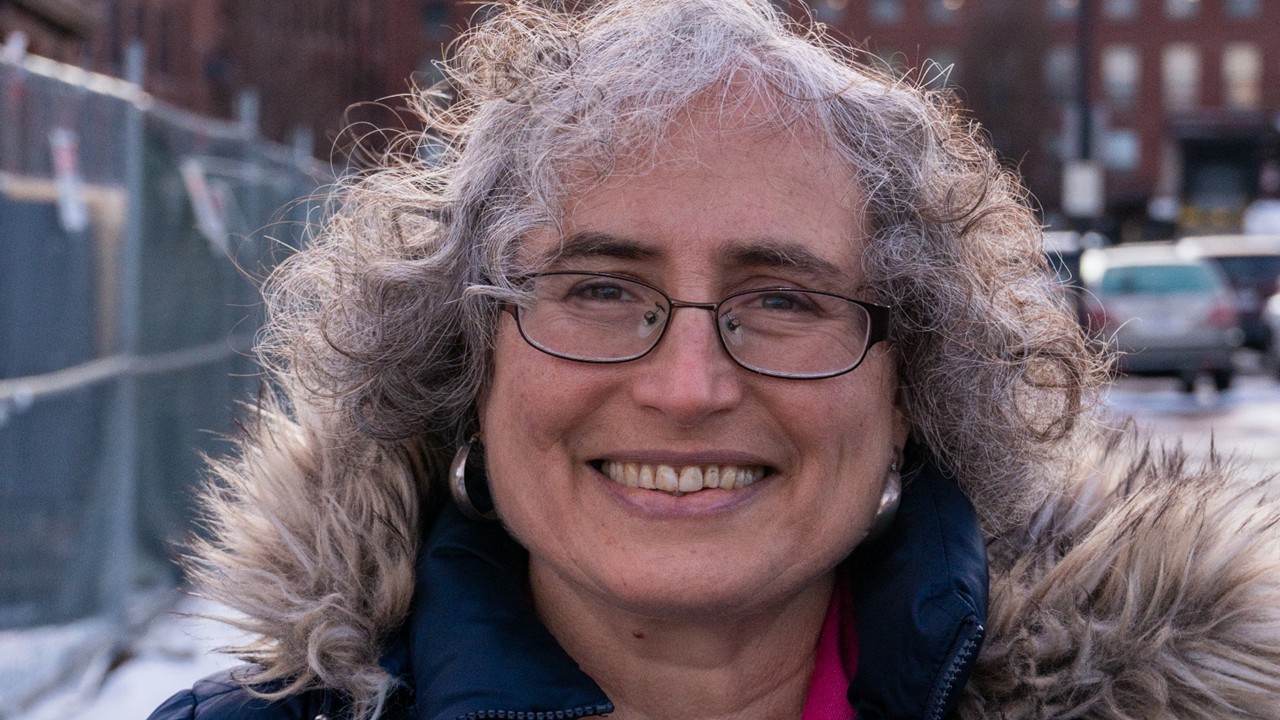

At Lawrence CommunityWorks, a longtime investment partner of PCI, community transformation is built from within. For more than two decades, Jessica Andors has helped lead that work in Lawrence, guiding the organization from its rebirth into what is now a nationally recognized model for resident-driven development. What began as a MIT graduate school project has evolved into a long-term commitment to a city defined by its resilience, diversity, and strong sense of community.
In this conversation, Jessica reflects on what drew her to Lawrence, the principles that have sustained her work, and some of the lessons that other organizations can leverage in their own communities. She also shares her perspective on what comes next, for both Lawrence and the broader field of community development, as leaders work to build more inclusive, connected communities.
We had a lot of fun chatting with Jessica and we are sure that you’ll enjoy it as well!
You've been involved with Lawrence CommunityWorks since its rebirth in 1999. What originally drew you to its work and what has kept you committed to the Lawrence community for more than two decades?
I grew up in a very socially conscious family in New York. It was part of the air I breathed. My parents were always discussing politics, labor movements, and global events at the dinner table, and some of my older relatives had worked in New York’s garment district and were involved in union organizing. From a young age, I was drawn to stories about communities working together to create real change.
That led me to study urban planning in graduate school at MIT. During that time, I worked on a class project in Lawrence focused on economic development. As we spent more time in the city, interviewing residents and community leaders, I became fascinated by Lawrence. It’s a city with incredible diversity, energy, and history, but also one that has and was navigating economic and social challenges. What struck me most was how engaged and resilient the community was. It felt like a place where meaningful change was possible.
A few of my classmates and I began looking for ways to stay involved in Lawrence after the project ended. Around that time, we connected with community organizer Bill Traynor, who was working to revive Lawrence CommunityWorks. He was a nationally known community organizer, and he was trying to get something started in his hometown.
What began as a short-term project connected to my grad school studies quickly grew into something much larger, and I eventually stepped in to help lead the organization during its early rebuilding years.
What has kept me here for more than two decades is the people, the collaboration, and the shared belief that individual success and community progress are deeply connected. Being part of that ongoing effort to strengthen Lawrence has been incredibly rewarding.
Over time, that momentum has snowballed and my network has grown, and that keeps drawing me deeper. I’ve raised my son in Lawrence, he’s 16 now, and he has truly grown up within this community. Being here has given our family a strong foundation and a rich network of friends and colleagues who share this spirit. That sense of connection keeps me rooted here.
At LCW we’ve certainly helped cultivate that spirit, but we’re not the only ones. There was already a strong foundation to build on, and we’ve met many amazing partners along the way. One thing that stands out about Lawrence is the deep spirit of collaboration, especially among the nonprofit organizations. It’s a unique community.
Of course, it’s not perfect. Like any community, there are moments of territoriality or disagreement. But for the most part, the nonprofit sector here is remarkably collaborative when it comes to tackling community challenges.
What lessons could you apply from your work in Lawrence to organizations trying to strengthen neighborhoods and expand opportunity?
For me, it really starts with community organizing. The most important thing that organizations can do is go out, talk to people, and most importantly listen to what they say and how they are feeling and thinking. It’s all about understanding your community’s priorities, aspirations, and experiences, and identifying the issues that resonate most across that community.
Once you start from that place, you can begin developing solutions with the community rather than for the community. At Lawrence CommunityWorks, we often hold community conversations or convene design teams made up of our local residents. Of course we compensate people for their time, encourage grassroots research, and we all work together to explore possible solutions. Many of our programs begin as ideas that we test and refine collaboratively and collectively.
That approach doesn’t always produce immediate, large-scale change. But it leads to meaningful local interventions that make real impact and inspire others. Over time, when organizations continue investing in what works and sustaining successful programs, those smaller efforts add up to larger, lasting change.
Another important lesson is that community development can’t rely on one-size-fits-all solutions. Every community has its own history, culture, and lived experiences that shape what approaches will work. For example, the dynamics of a largely immigrant Latino community like Lawrence are very different from those of other communities with different historical roots.
That’s why grounding the work in local voices and creating spaces for residents to help shape solutions is so essential. When people see their own goals directly connected to the success of their community, real momentum begins to build.
Looking ahead, what role do you see your organization and community members playing in shaping Lawrence’s next chapter?
I see it as building on what we’ve already done. Doing more and doing it bigger. We’ve been fortunate to have strong partners, like PCI, who have given us access to capital that has allowed us to take on ambitious projects that we couldn’t fund ourselves. That trust in tandem with the actual investment is critical for making real transformation possible.
We’ve already seen how focused work can reshape a neighborhood. In the East Island area of the North Canal Mill District, we’ve helped create an entirely new neighborhood with affordable housing, open spaces, local businesses, and community facilities, through partnerships with lenders, local organizations, and city, state, and federal resources. I’d love to replicate that model in other parts of Lawrence: identifying areas with challenging land-use issues or early signs of revitalization, then bringing our resources and expertise to catalyze progress.
Ultimately, our communal goal is to continue empowering residents to shape their neighborhoods, linking their personal growth to the city’s future, and ensuring that Lawrence remains a place where collaboration, innovation, and opportunity flourish.